

Simulation of Automated & Intermodal
Mobility and Transportation
5 March 2026 | Holzkirchen
The 2nd simXmobility brings the future of automated and intermodal mobility to life. This unique event unites industry leaders, mobility planners, logistics operators, technology innovators, and researchers to discuss and explore how Digital Twins and AI are shaping the next generation of connected, autonomous, and sustainable mobility and transportation. Be part of the conversation, network with experts, and discover new insights to drive innovation and collaboration in your area.
MOTIVATION
Cities and logistics ecosystems are entering a thrilling new era of mobility transformation. Autonomous people and cargo shuttles, robotaxis, automated Bus Rapid Transit (BRT) lines, autonomous cargo pods, last-mile delivery robots, urban cable cars, autonomous watercraft and even Urban Air Mobility systems like drones and eVTOLs are redefining how people and goods move across cities, depots, ports and airports.
The boundaries between transport modes are blurring, creating a dynamic, interconnected landscape of movement.
As these innovations gain speed, traffic and logistics operators face an exciting yet complex challenge - balancing technology, regulation, operations, and public trust. Managing this new era of intermodality demands powerful tools: simulation and artificial intelligence are key factors. These technologies are no longer optional; they are the enablers of safe, efficient, and scalable mobility.


Data: The Fuel for Intermodal Mobility Innovation
To make the vision of intermodal mobility a reality, data becomes the driving force of innovation. Simulation and digital twins rely on diverse, extensive, interconnected, and quality-assured datasets - ranging from 3D environments, traffic flows, and energy consumption to infrastructure layouts, sensor data, and human behavior models.
Equally important is ensuring that simulation and AI tools don’t remain in the hands of a select few. The event will highlight how methods and platforms can be improved, standardized, and democratized - making simulation-driven innovation accessible to planners, engineers, and operators everywhere.
AGENDA
8:30 AM
Check-in
Participant Check-in and Networking in the Matchmaking Arena
9:00 AM
Welcome & Introduction
Alexander F.
Walser | ASCS e.V.
9:05 AM
Keynote
Title tba
Prof. Dr.-Ing. Tjark SIEFKES | DLR e.V.
9:35 AM
Keynote
TraffIQ Lab: Microscopic Simulation and Visualizion of Large Scale Urban Mobility
Prof. Dr. Harry WAGNER| Technische Hochschule Ingolstadt
Abstract
Ongoing urbanization in Germany leads to an increase in the already high congestion rate and -intensity as well as to a deterioration of life quality in cities due to emissions and soil sealing. Simulation can be an important tool for identifying effective mobility solutions. Visualization, on the other hand, can foster a shared understanding of the underlying problems and increase the acceptance for proposed solutions among all stakeholders. While macroscopic tools are widely used in public service, their aggregated flow models cannot represent automated driving functions, adaptive signal control systems, or innovative traffic management concepts that require the management of individual traffic participants. Established microscopic tools offer these capabilities. However, their simulations are typically limited to small areas as driver models are highly detailed and computationally expensive. SUMO is an open-source alternative suited for large-scale microscopic simulation, yet its console-driven workflow, the fragmented toolchain and limited visualization options pose as a barrier against a widespread use in public service. This work describes the development of TraffIQ Lab, a SUMO Wrapper that automates the data flow in SUMO for the simulation of real-world traffic scenarios and provides a customizable user interface with enhanced visualization capabilities. By this, TraffIQ Lab enables users without programming experience to simulate and visualize the influence of novel technologies and traffic management concepts, even if the simulation requires microscopic road users. This supports users in finding efficient solutions to traffic-related problems. We developed TraffIQ Lab with the Game Engine Unity, harnessing its rendering and UI capabilities. The user interface is based on a real-world 2D map that is implemented as a slippy map. The map tiles are fetched from the OpenStreetMap API. When a user selects a map tile, the application loads infrastructure data for the tile from OpenStreetMap and overlays it graphically. During this process, all the infrastructure-related files are generated automatically that are required for running a SUMO simulation. Users can manipulate the infrastructure via the CityEditor or select the origin and the destination zone for different types of road users in the ODEditor. Starting the simulation launches SUMO with the parameters to simulate the scenario created in TraffIQ Lab. The resulting output provides information on routes, emissions, and the timing of road users, which can then be visualized within TraffIQ Lab. We provide TraffIQ Lab as a service: Based on the requirements of a partner, our team can extend or customize the simulation on the SUMO-side and the visualization on the Unity-side. So far, we have developed a macroscopic simulation mode. The microscopic simulation is still under development.
10:00 AM
The Master Conductor: How Simulation Orchestrates the Industry 5.0 Mobility Ecosystem
Yao SCHULTZ-ZHENG | E-Mobility Sharing Economy Services
Abstract
The decarbonization of the transport sector often fails due to an overly narrow focus on the end product. A “green” vehicle operating within a fossil-based infrastructure is not a solution - it merely shifts the problem.
In this presentation, Ms. Yao Schultz-Zheng - founder of E-Mobility Sharing Economy Services - breaks down the silos between vehicle production, global supply chains, the expansion of renewable energy grids, and intermodal transport infrastructure. Learn how modern simulations (co-simulation & digital twins) act as a “conductor,” linking these complex sectors into a functioning, sustainable overall system. Sustainability must be simulated holistically - from the molecule to the driven kilometer.
10:15 AM
The Autonomous Future Starts Now: How Cities Can Lead the Change
Nicolai HARNISCH | Bayern Innovativ GmbH
10:30 AM
Matchmaking Arena
Networking Break
11:15 AM
Smart & Secure Yard Management
Tobias KINDSMÜLLER | ITK Engineering GmbH
Abstract
The introduction of automated processes in logistics yards can contribute significantly to the optimization of yard management, but it also entails potential challenges. Smooth interaction between humans and automated systems requires careful planning and implementation in order to minimize possible risks, particularly at the interfaces between different systems. Problems can arise when humans and machines do not work together seamlessly or when automated processes are not sufficiently prepared for human involvement. By using state-of-the-art technologies such as 5G, not only logistical challenges are to be addressed, but also a safe and efficient collaboration between humans and machines on logistics yards is to be enabled.
Practical use case:
With Dysis (Dynamic, Sensor-Integrated Assistance System), the team at ITK Engineering has developed and patented an innovative assistance system for logistics operators that safely guides vehicles to the loading bays in container yards. Instead of equipping each individual vehicle with sensors, the loading bays in the logistics yard are fitted with sensors that communicate directly with the driver via a specially developed app. When a truck enters the logistics yard, the assistance system detects its position. As soon as the driver approaches the bay and starts maneuvering, the sensors report possible obstacles in the driving path—such as unexpected pedestrians—via audio and visual alerts in the app on the driver’s smartphone. The approach has also been implemented for teleoperation, i.e., the remote control of a transport vehicle from a control center. For the teleoperator, the app is integrated into the control station. An automated vehicle receives the information from the assistance system directly via 5G.
11:35 AM
Virtual Homologation: A Holistic Strategy or a Regulatory Mirage?
Dr. Christopher WIEGAND | HOLON GmbH
Abstract
As physical road testing is insufficient for the safety validation of autonomous vehicles, simulation-based strategies are essential for homologation. This presentation examines the technical and methodological frameworks necessary for L4 type approval, focusing on the following core pillars:
- Data Pipeline: Building robust pipelines for heterogeneous data sources.
- Traceability: Ensuring consistency from ODD requirements to validation results.
- Simulation Credibility: Demonstrating model fidelity, scenario coverage, and statistical validity.
- Versatile Infrastructure: Developing flexible test environments that adapt to evolving software architectures and regulatory demands.
11:55 AM
Virtual Scenarios, Real Decisions: Simulation‑Driven Control Center Training for Operators
Clara‑Sophie
Kasassov,
Sebastian LORENZ | Fraunhofer IVI
Abstract
For the operation of autonomous bus fleets in public transport, control centers are indispensable. They serve as central entities for both technical supervision and decision-making. This requires qualified personnel in the control center who can act reliably and appropriately even in exceptional situations. Accordingly, the control center staff are subject to the qualification and training requirements defined in Section 14 of the AFGBV.
Fraunhofer IVI offers a training concept that realistically conveys the operation of the control center and prepares employees in a targeted manner for later operations. Since critical traffic situations cannot be deliberately created or reliably reproduced in real-world operation, training with real vehicles is only possible to a limited extent. For this reason, a simulation-based training environment is used.
Using OpenDRIVE and OpenStreetMap data, the real deployment area of the control center is recreated as a three-dimensional virtual world in the CARLA simulation environment. This creates a realistic training environment that has a direct connection to the later area of operation.
The virtual vehicles move within this environment, while the control center software displays camera and telemetry data exactly as it would in live operation.
For training purposes, test scenarios are developed, among other things, using the OpenSCENARIO standard. This makes it possible to deliberately simulate traffic obstacles, critical vehicle states, and passenger emergencies. In this way, decision-making and the operation of the control center can be trained and evaluated under near-realistic and safe conditions.
The result is a time- and cost-efficient training concept that can be used independently of real vehicles, weather conditions, or traffic situations. The simulation allows unrestricted repeatability and adaptability of training content and makes a significant contribution to expanding the competencies of control center staff in dealing with autonomous vehicles.
12:15 PM
Ecosystem Mobility 4.0 - Focus Area V&V-Methods
Lutz MORICH | ASCS e.V.
12:30 PM
An AI Agent AI for Scalable and Traceable AD Scenario Libraries
Stephen LERNOUT | DEONTIC
12:50 PM
ENVITED-X Data Space for Automated Mobility Simulation
Felix HOOPS | ASCS e.V.
1:00 PM
Lunch Break
Networking in the Matchmaking Arena
2:00 PM
Toward Evidence-Based Safety Cases for Autonomous Driving Systems: AI-Assisted Scenario Coverage and Verification Across XIL
Ramdane TAMI | Dassault Systemes
2:20 PM
Simulation for ADAS Validation and Scenario-Based Testing for NCAP
Günther Hasna | Ansys
Abstract
The 2026 protocol from Euro NCAP introduces mandatory robustness testing, requiring ADAS to perform reliably beyond nominal conditions. Physical testing alone cannot cover the expanded scenario space, making credible simulation essential. This presentation outlines a perception-in-the-loop validation approach. Physically accurate camera and radar models are integrated into scenario-based workflows to evaluate full-system performance under standard and extended NCAP ranges. By replacing “perfect sensing” assumptions with trustable sensor simulation, engineers reduce the Sim2Real gap, expose edge cases earlier, and accelerate safe, regulation-ready ADAS development.
2:40 PM
Credible Simulation
Dr. rer. nat. Maximilian WOERNER | Bosch Engineering GmbH
Abstract
The increasing complexity of automated and intermodal mobility systems demands new approaches to system validation. Virtual methods such as simulation and virtualization offer significant efficiency gains, but only if they are credible. This talk introduces the concept of Credible Simulation as a foundational requirement for virtual integration, verification, validation, and ultimately, virtual release. Key credibility aspects such as error management, organizational capability, verification, validation, and uncertainty quantification are discussed. Bosch Engineering and ITK Engineering collaborate closely with a particular focus on Software-in-the-Loop (SiL) methods. A reference project on NCAP simulation for AEB systems illustrates the practical application of the Bosch framework for Credible Simulation.
3:00 PM
Matchmaking Arena
Networking Break
3:30 PM
World Café
- Ecosystem Mobility 4.0 - V&V Methods
Moderation: Stephen Lernout, DEONTIC - Simulation-driven Sustainable Mobility
Moderation: Lutz Morich, SYSTEMIMPULSE
4:45 PM
Summary and Farewell
Alexander F.
Walser | ASCS e.V.
SPEAKER SPOTLIGHT

Prof. Dr.-Ing.
Tjark SIEFKES
German Aerospace Center (DLR e.V.)
Director of the Institute of Vehicle Concepts

Prof. Dr.
Harry WAGNER
Technische Hochschule Ingolstadt
Degree programme director "Automotive & Mobility Management" plus "Mobility Management and Mobility Technologies"

Yao SCHULTZ-ZHENG
Founder & CEO at E-Mobility Sharing Economy Services

Nicolai HARNISCH
Innovation network Mobility, Head of Networked Mobility, Bayern Innovativ GmbH

Tobias KINDSMÜLLER
ITK Engineering GmbH
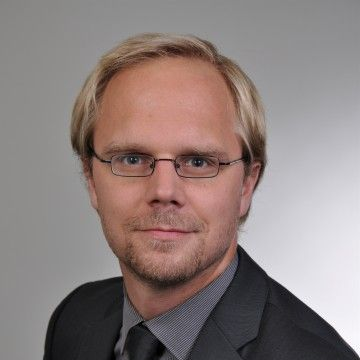
Dr. Christopher WIEGAND
Senior Expert Autonomy Validation
HOLON GmbH

Clara‑Sophie Kasassov
Research Associate at Fraunhofer IVI

Sebastian
LORENZ
Research Associate at Fraunhofer IVI

Stephen LERNOUT
Co-founder & CEO at DEONTIC

Dr. rer. nat.
Maximilian WOERNER
Bosch Engineering GmbH
Development Engineer
SPONSORS & EXHIBITORS



TICKETS
Your ticket for simXmobility includes:
- Access to all Live Presentations
- Entry to the Matchmaking Arena
- Complimentary Catering throughout the day
- Access to Event Documentation
Experience one day of knowledge-sharing, innovation, and community in the field of Automated & Intermodal Mobility and Transportation!
| FEE | until February 9, 2026 | After February 9, 2026 |
|---|---|---|
| ASCS Member | 150 € | 250 € |
| ASCS Academic Member | 100 € | 175 € |
| Regular (non-member) | 250 € | 350 € |
| Regular Academic (non-member) | 200 € | 275 € |
all prices +VAT
The academic fee applies to employees and students of universities, universities of applied sciences, research institutions, and non-profit organizations.
Exclusive Group Offer
Boost your team’s participation! When your organization purchases
3 or more tickets, you will receive a
20% group discount.
Empower your colleagues, strengthen collaboration, and join us with a larger team - while saving on costs. Contact us to get your individual promotion code.
Who Should Attend
- Mobility and transportation planners
- Operators of shuttle fleets, logistics hubs, and depots
- Vehicle manufacturers
- Development and certification experts
- Providers of simulation technologies, AI, and data platforms
- Research institutions
- Authorities and municipalities
Showcase Your Technology
at simXmobility
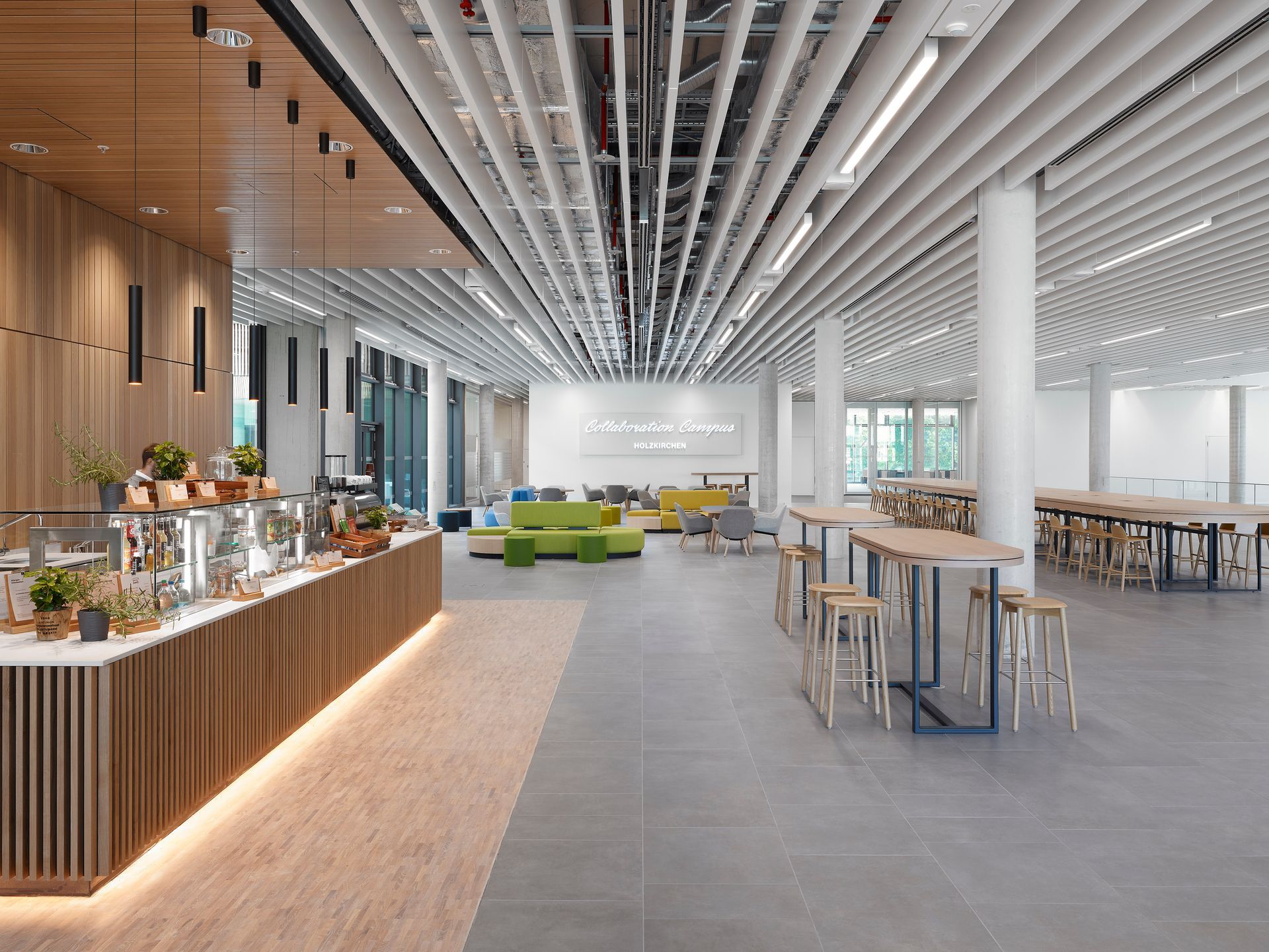
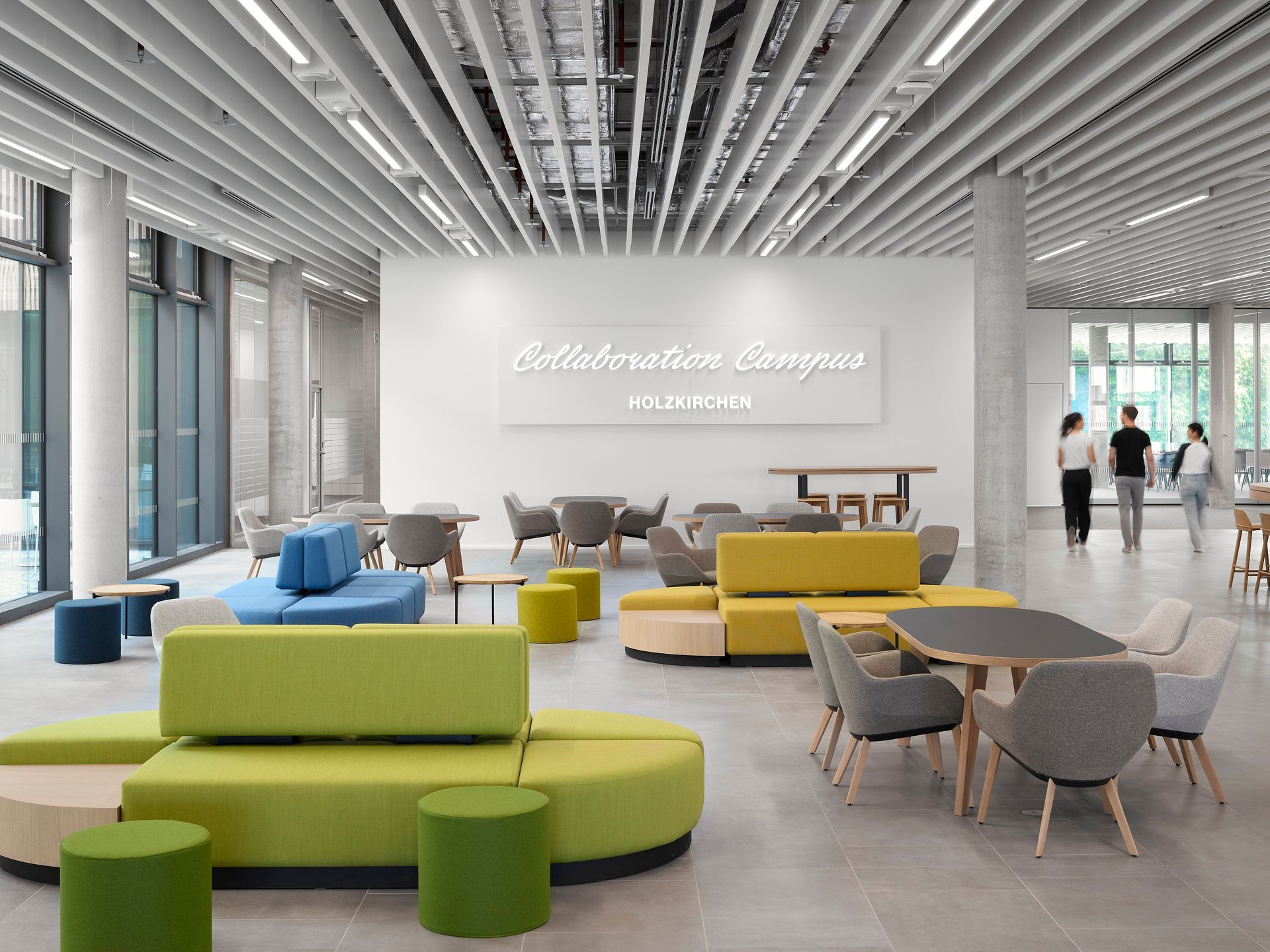
Are you ready to put your latest innovation in front of industry leaders and potential partners? At simXmobility, our Matchmaking Arena offers the perfect stage to present your research, solutions, products, or services to a highly engaged, future-focused audience.
Whether you’re developing breakthrough simulation technologies, advancing AI methods, designing new mobility concepts, or delivering intelligent services for intermodal mobility and transportation, we’re eager to highlight your work.
Join us and demonstrate how your innovation is shaping the future of mobility.
It’s simple to get involved:
Contact us to discuss the possibilities for securing your matchmaking package. Together, we’ll create a space that puts your technology in the spotlight and fosters collaboration with industry leaders and researchers.
Reach out to us now to join the Matchmaking Arena!
We look forward to hearing from you and showcasing the future of mobility simulation together.