
From Simulation to the Factory Floor: How Intelligent Robotics Is Opening Up New Markets
Insights and Takeaways from the Future Robotics Summit 2026
For decades, industrial robots have done one thing extremely well: repeat a fixed program, precisely and tirelessly, behind safety fences. That is changing. AI, better sensors, powerful onboard computing and realistic simulation are teaching robots to perceive their surroundings, adapt to new tasks and work safely alongside people. At the same time, labor shortages and the demand for flexible production are raising the pressure to automate. What does this mean for the factory of tomorrow? And what step are robots taking beyond the factory?
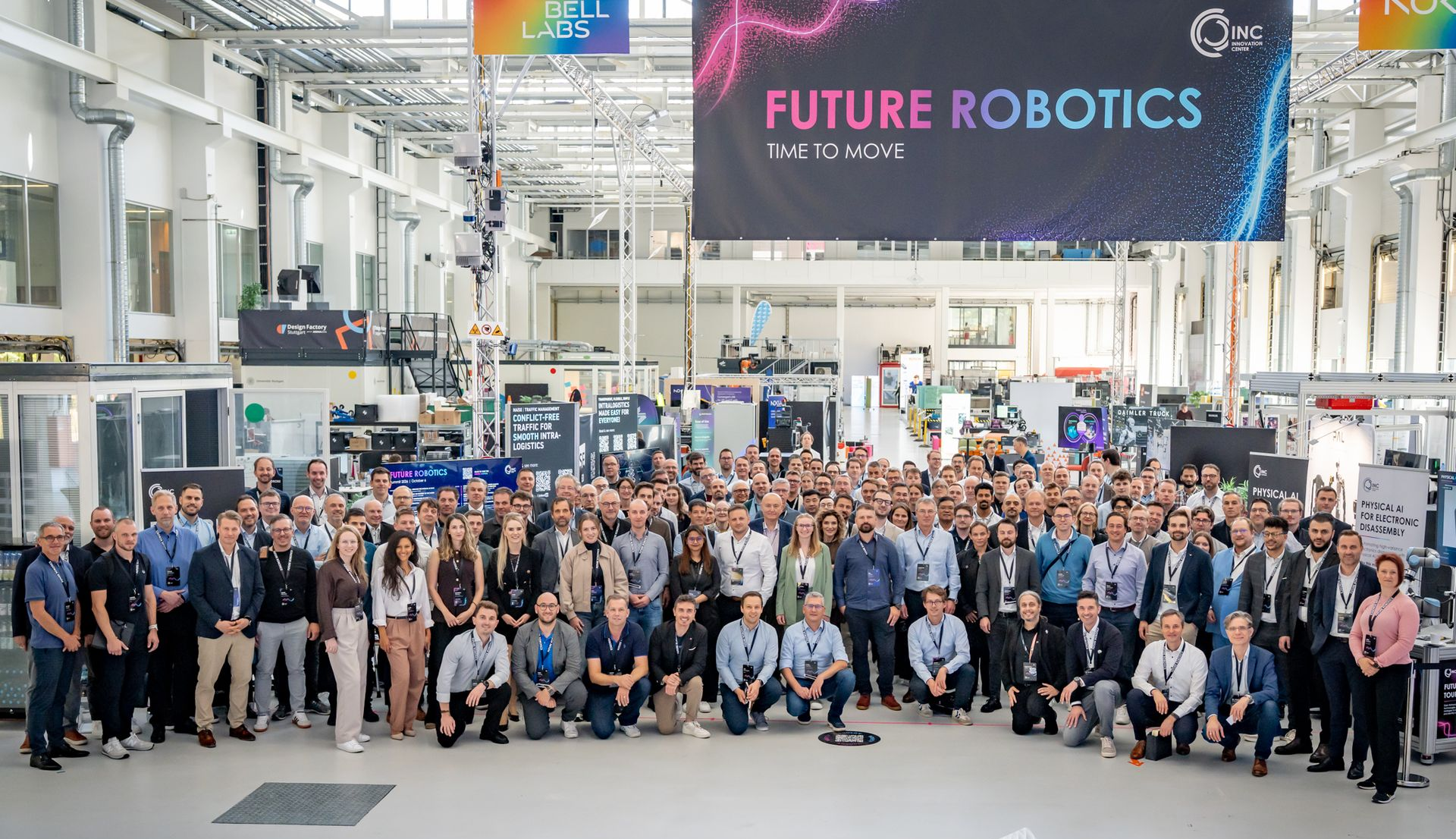
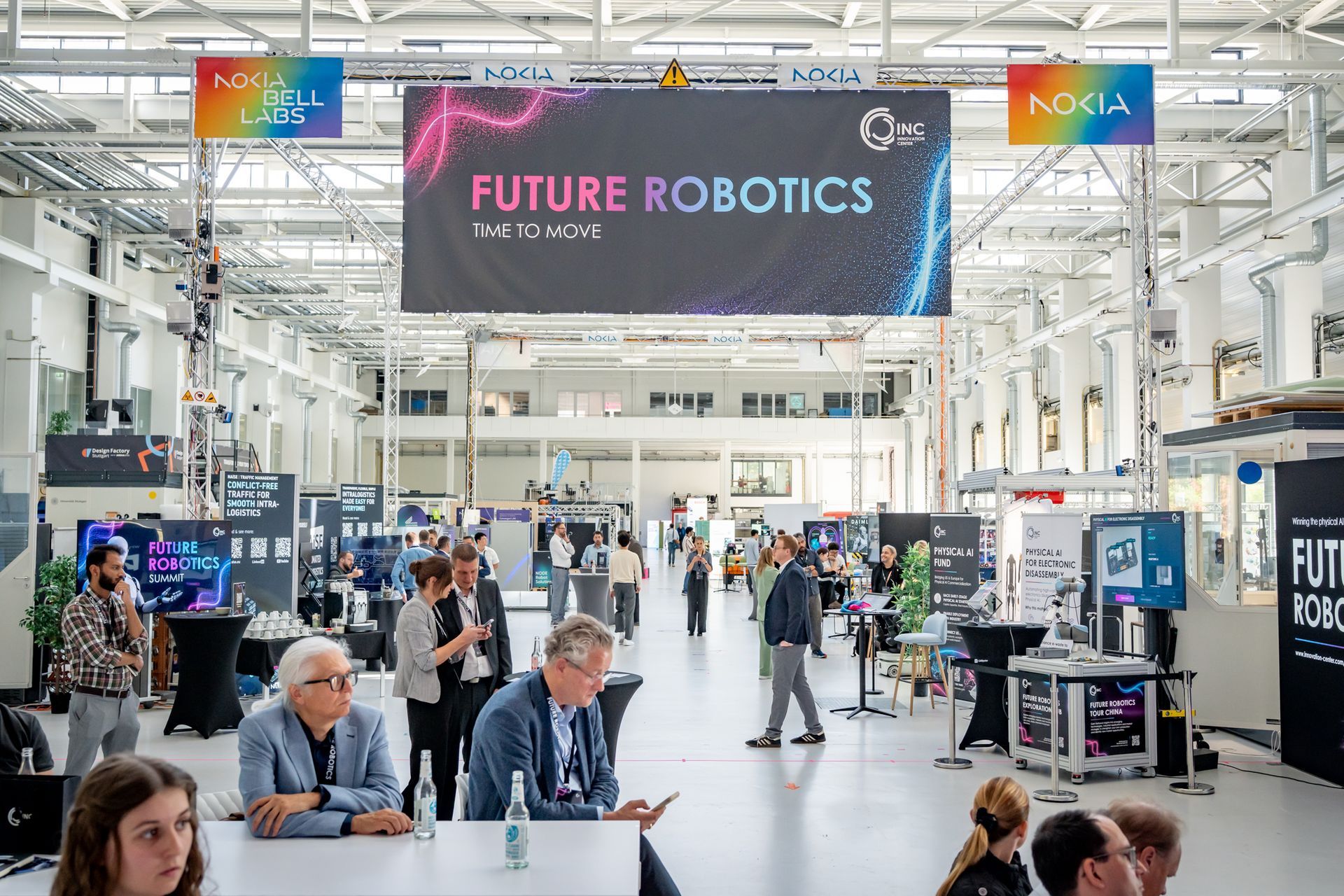
These questions ran through the Future Robotics Summit hosted by INC Innovation Center in Stuttgart in early October 2026. The motto was “Where Physical AI Meets Industry.” Around 170 participants from Europe, the US and Asia spent two days discussing how AI-powered robots can move from pilot projects to widespread deployment. Alongside talks and live demonstrations, an Experience Tour on the second day took us behind the scenes at SCHUNK, TRUMPF, OMRON and FANUC.
Physical AI is transforming industry at a rapid pace, and this shift rests on a broad foundation. According to the International Federation of Robotics (IFR), around 542,000 new industrial robots were installed worldwide in 2024, and more than 4.6 million were in operation. With around 27,000 new installations, Germany is Europe’s largest robotics market. AI now marks the next stage of development, and international competitive pressure is growing.
For ASCS community, this raises a further question: how can experience from virtual simulation, AI and the development of autonomous systems be put to use in robotics? Our answer after two days in Stuttgart: simulation is becoming an indispensable tool for testing and validating intelligent robots before they enter the factory or public spaces.
The Hare and the Hedgehog: Building Capabilities Rather Than Chasing the Hype
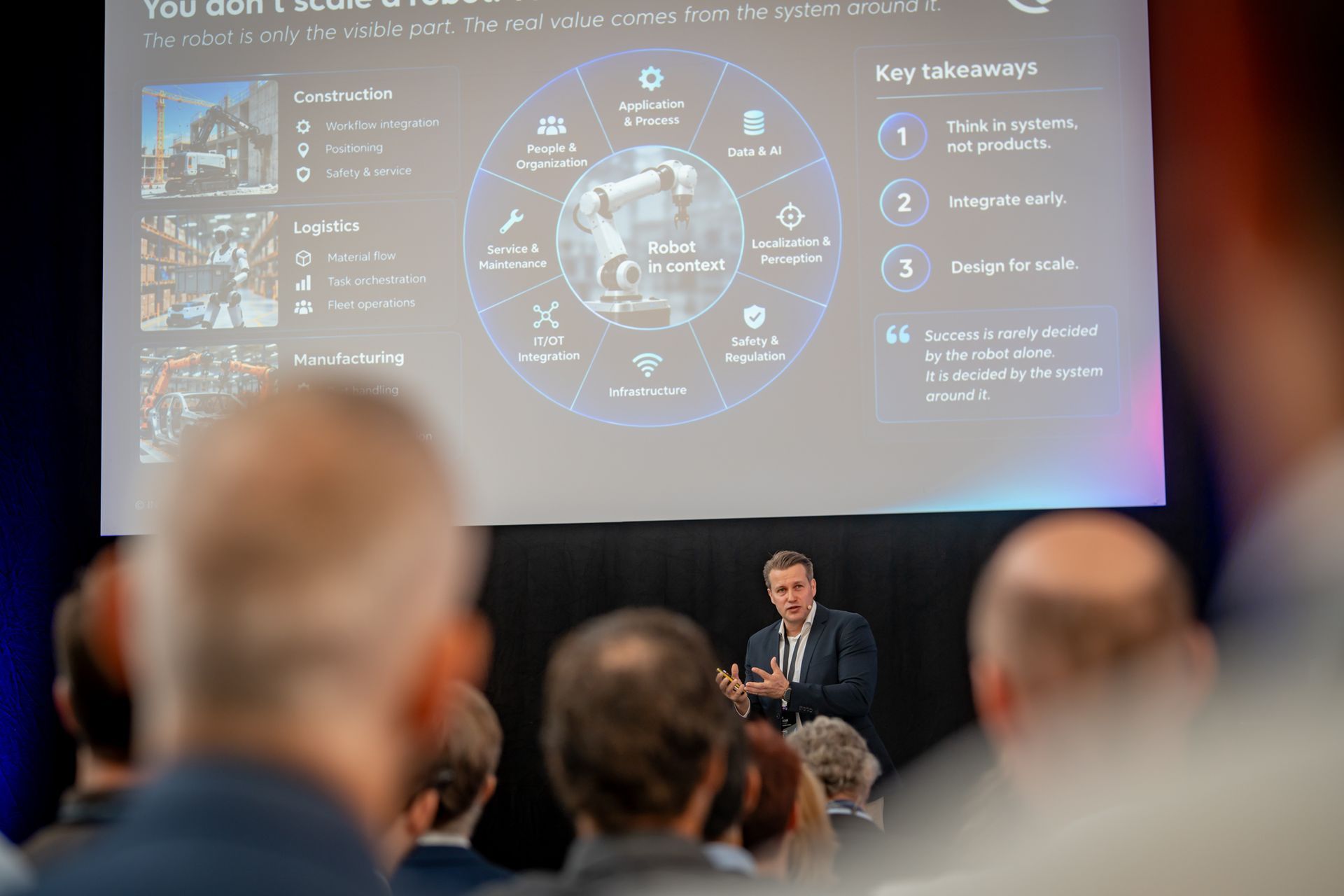
The next industrial race has already begun, according to the summit’s announcement. The opening keynote by Toni Drescher, CEO of INC Innovation Center, offered a clever counterpoint, drawing on the fable of the hare and the hedgehog: whoever starts out fastest and flashiest does not automatically win. Robotics is at the peak of a hype cycle, with capital flowing faster than solutions are reaching the factory floor. The recommendation, therefore, was not to be first at any cost, but to build now the capabilities that will be needed when it really counts.
Several pragmatic rules followed from this. Companies should start with familiar, simple use cases and avoid introducing a new application and a new technology at the same time. They should standardize processes first and only then deploy more sophisticated robotics. And they should think in systems: a robot only delivers value once it is properly integrated into production control, data flows and IT security.
John Deere showed what this looks like in a group with around 100 production sites. The starting point is always a real problem, never a technology in search of an application. Success criteria and baseline metrics are defined before the pilot project, not afterwards.
The Task Determines the Robot System
A mobile robot can transport material between stations. A collaborative robot can support workers during assembly. A mobile manipulator combines both by moving autonomously and picking parts on site. Selection therefore begins with the specific task: how much does the process vary? Where do workers and robots share the workspace? And what performance must the system reliably deliver in live operation?
Agile Robots summed it up: not every robot needs to be a humanoid. A human-like form suits versatile tasks, a wheeled platform is better for stability, and for long reach a dedicated design pays off. PAL Robotics from Barcelona also demonstrated how broad the spectrum is, developing mobile manipulators alongside humanoid robots.
One answer to changing conditions is Physical AI, meaning AI that enables robots to perceive their environment and adapt their behavior. How well this works becomes apparent, for instance, when a component is positioned differently than expected or the usual path is blocked. However, experts do not expect a sudden breakthrough in robotics like the one seen with ChatGPT, but rather a development that takes time.
Beyond the Factory
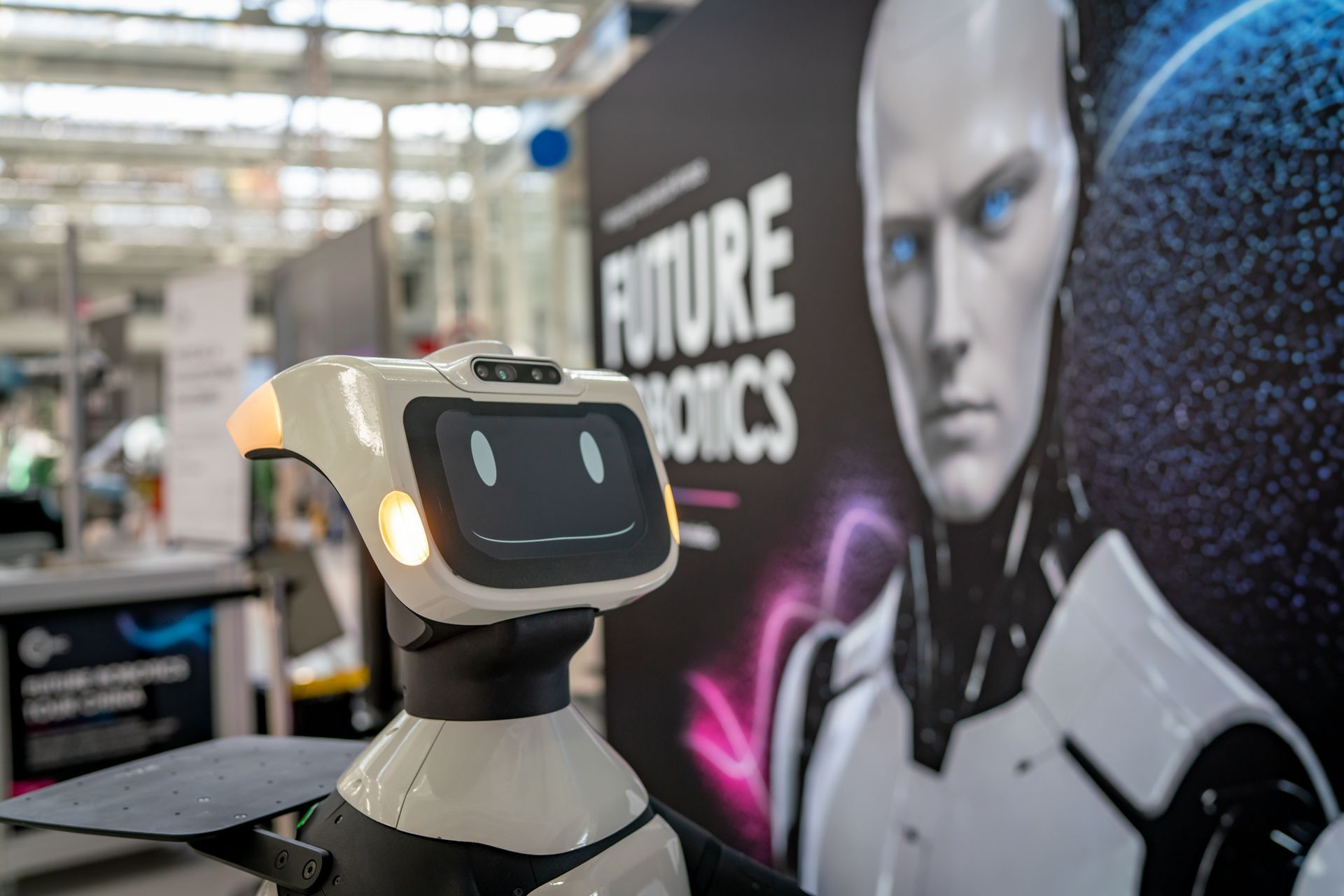
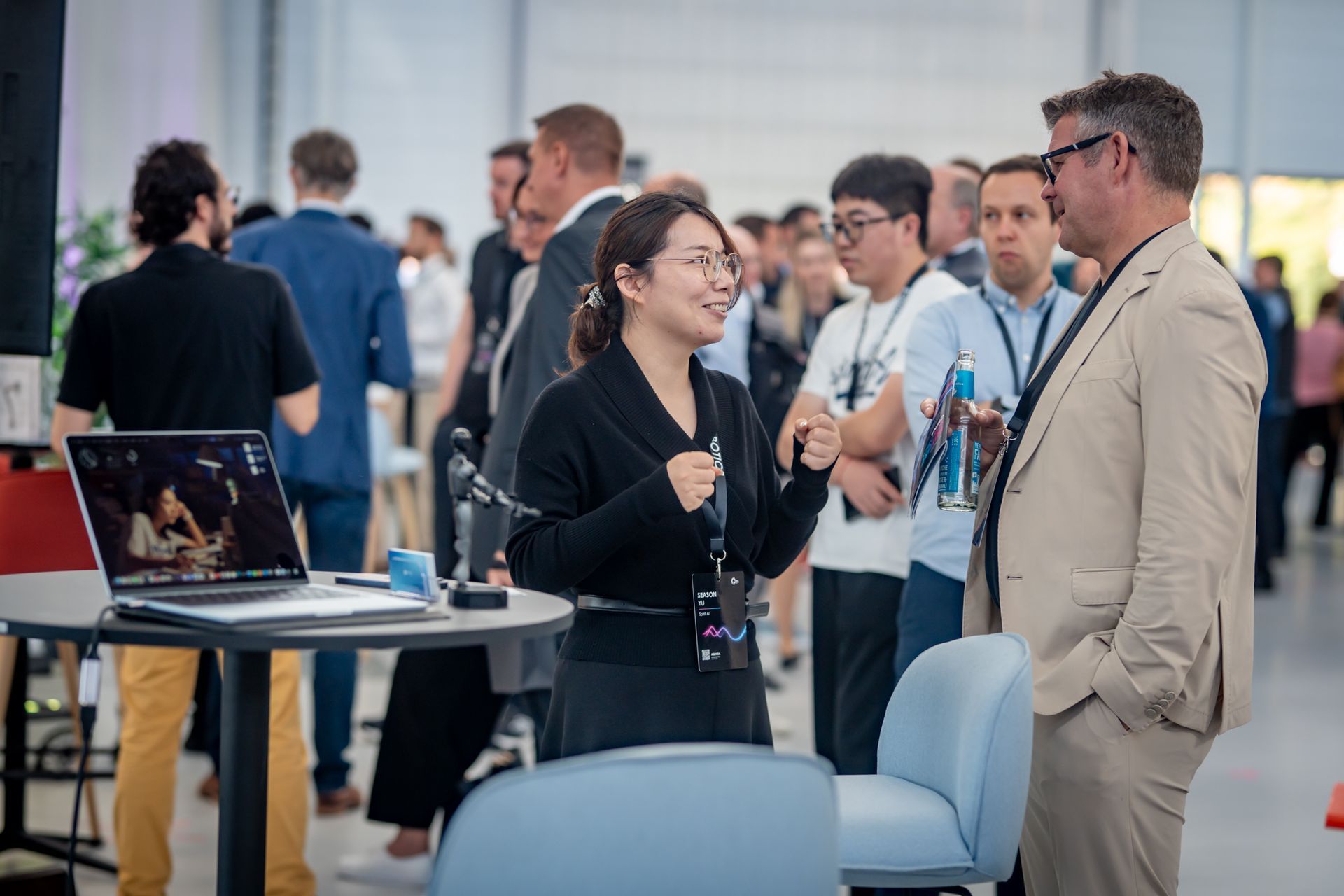
Robots are increasingly leaving the shielded confines of production. PAL Robotics aims to take robots out of the safety cage and deploy them as service robots where people live and work, for example to assist people in need of care. Beijing-based start-up Spirit AI is developing its platform not only for industry but also for retail and commercial settings. Its stated goal: within ten years, ten percent of the world’s population should be able to own a robot of their own.
Experts expect the human-like form to play a significantly greater role in households and public spaces than in industry. The closer robots come to everyday life, the more important it becomes to validate their behavior in advance, much like automated vehicles on public roads.
Experience Tour: The Role Simulation Plays in Practice
The Experience Tour took us to SCHUNK, TRUMPF, OMRON and FANUC. We were particularly interested in how these companies use simulation today. Two stops illustrated this especially well.
SCHUNK: Grippers with a Sense of Touch
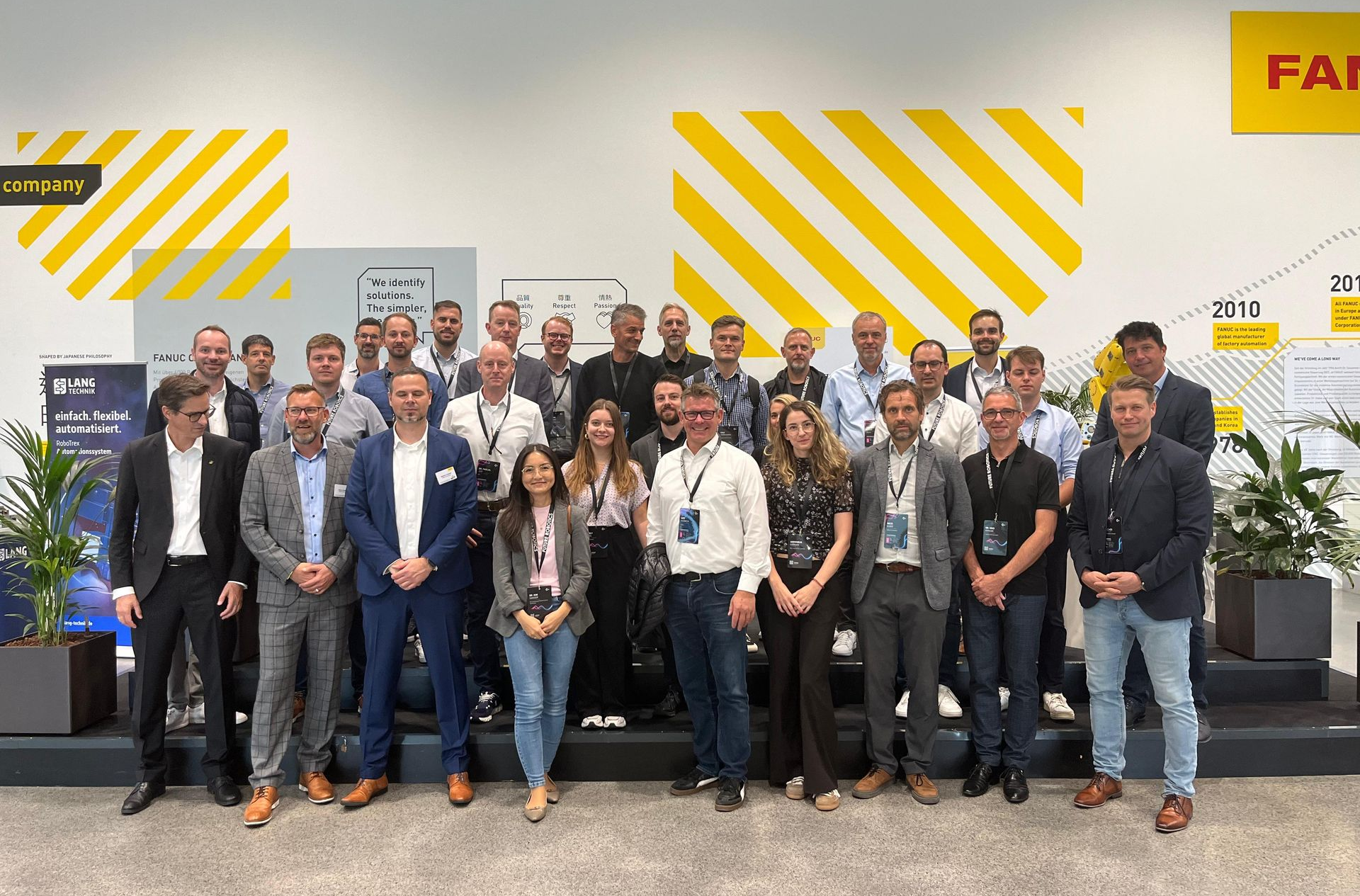
At SCHUNK, it became clear how AI is changing gripping. Sensors in the fingers measure force and touch and report the values to the controller without delay. This allows the robot to continuously adjust its movement and grip force, for example when handling delicate or flexible parts. The gripper thus no longer just executes commands but supplies data for the AI itself.
Simulation is part of the product. SCHUNK provides digital twins of its grippers, i.e. virtual replicas that can be integrated into common simulation platforms such as NVIDIA Isaac Sim. The company makes drivers and simulation tools freely available as open source. This allows system workflows to be checked on the computer in advance and gripping strategies to be tested virtually before a real part is ever moved.
Three examples brought this to life. SCHUNK tests its five-finger robotic hand virtually as it grips boxes and materials, and also uses these simulations to train AI. For the modular GROW automation cells, the control software is programmed on the virtual model while the real cell is still being built. Together with Schaeffler and NVIDIA, a previously manual workstation for transmission assembly was also virtually replicated to prepare it for automation. As next steps, SCHUNK intends to bring simulation and reality even closer together and have robots learn complex sequences on their own with the help of AI.
TRUMPF: It’s the Rare Exceptions That Matter
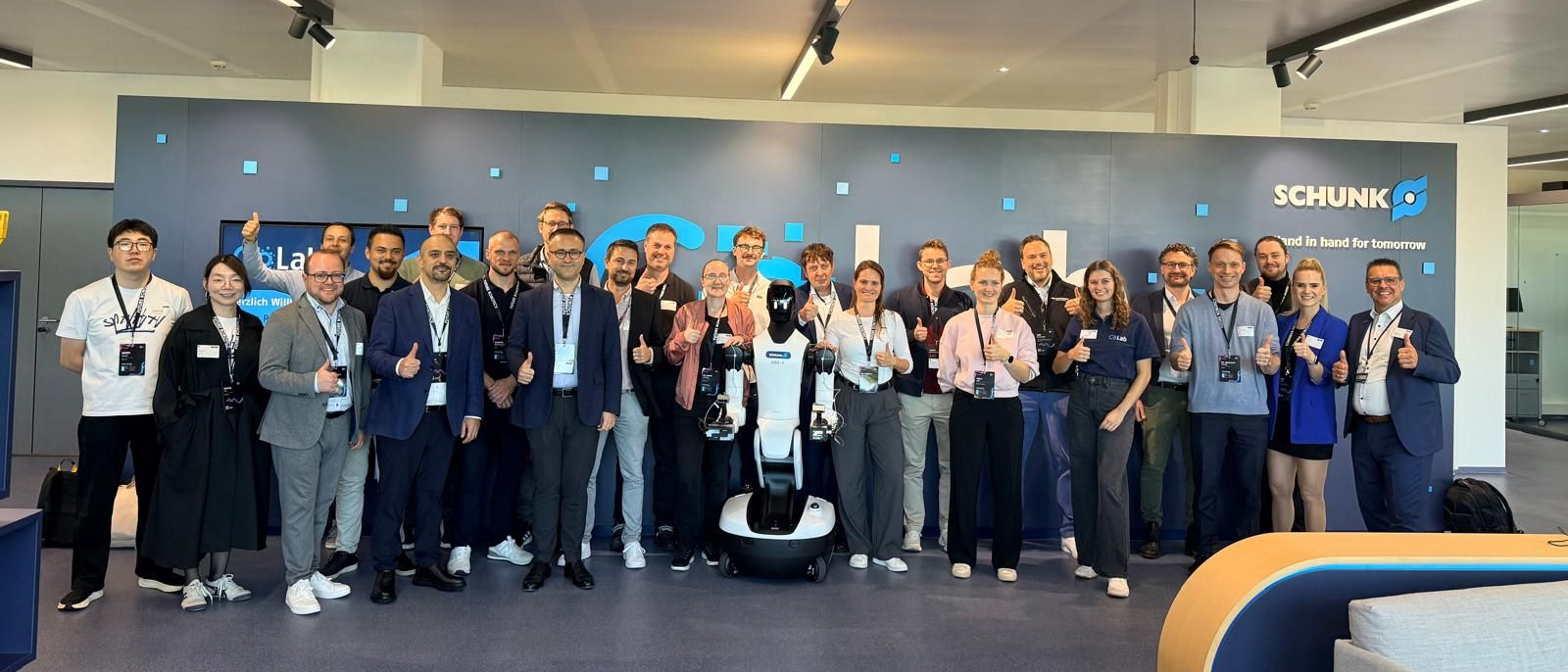
At TRUMPF, Ralph Lange showed how robotics can be connected to existing machines. Customers work with their software and machine as usual, and the robot automatically receives the information it needs. The SortMaster Vision sorts laser-cut parts autonomously. It identifies parts using a camera and AI, plans its own movements, and works with robots from different manufacturers. It is based on technologies from partner Intrinsic. Before deployment, every process can be tested on the virtual model.
Lange’s perspective on exceptions was particularly insightful. Frequent faults are quickly resolved in operation, but rare edge cases keep cropping up. Examples include overlapping parts whose order the camera misidentifies, or a small scrap piece from the cutting process lying under or on top of a component and endangering the gripper. Autonomous robots therefore need a combination of trained AI, automated planning and fixed rules for exceptions. The key to success, he said, is data from live operation and regular software updates.
Where Simulation Prepares for Real-World Testing
Take a mobile pick-and-place task. A robot is to pick up components lying in varying positions and bring them to an assembly station. In a simulated work environment, it is possible to examine which positions its gripper can reach, when components are hidden from the camera, and how changed travel routes affect cycle time. These variants can also be used to train an AI. High-performance computers reduce computing time when many variants are run in parallel.
Rare exceptions can also be addressed in a targeted way. Instead of waiting for the next fault on the shop floor, known edge cases are virtually recreated, varied and retested before every software update. This approach is already established in testing automated driving functions.
A trial on the real system then shows how robustly it performs under changing lighting, with imprecise component positions or when interacting with workers. Observations from operation feed back into the simulation model. This makes it possible to decide more precisely which change to the robot, the software or the workflow will deliver the greatest benefit.
Those who carry out the process every day know the situations that are easily overlooked during planning. This hands-on knowledge belongs in the test selection from the very start. Equally early on, it is possible to clarify what qualifications employees need for operation and troubleshooting. Amid all the enthusiasm for autonomous systems, many speakers emphasized the human factor. People decide which tasks make sense to automate, how employees are involved, and what knowledge companies build up. Acceptance grows when employees take ownership of the new technology.
Robotics as a New Market for Suppliers
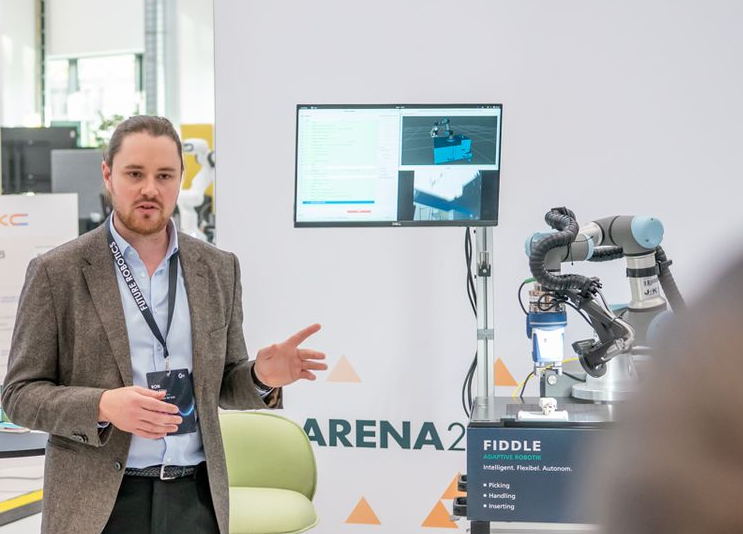
One particularly interesting contribution came from Sören Brüchmann, Director at TQ RoboDrive, who highlighted the perspective of European suppliers for humanoid robotics. Drives, sensors, electronics, control software and the integration of complex systems are among the competencies that many companies bring from the automotive industry. In robotics, these can give rise to new products, such as compact drive units for robot joints or controllers for mobile robots.
SCHUNK shows what such a path can look like. The company aims to establish itself as a supplier of hands for humanoid robots and has spun off TACTILIA Robotics for this purpose. In addition, there is a development partnership with Bosch for an industrial-grade robot hand, an expanded collaboration with the German Aerospace Center (DLR), and the “Humanoid Robotics and Embodied AI” foundation, established jointly with Offenburg University of Applied Sciences and the BURGER GROUP.
This opens up two economic opportunities for Germany as an industrial location. Manufacturing companies can make their processes more flexible. Suppliers can leverage their existing development expertise to tap into new customers and applications.
Where Industry and Research Come Together
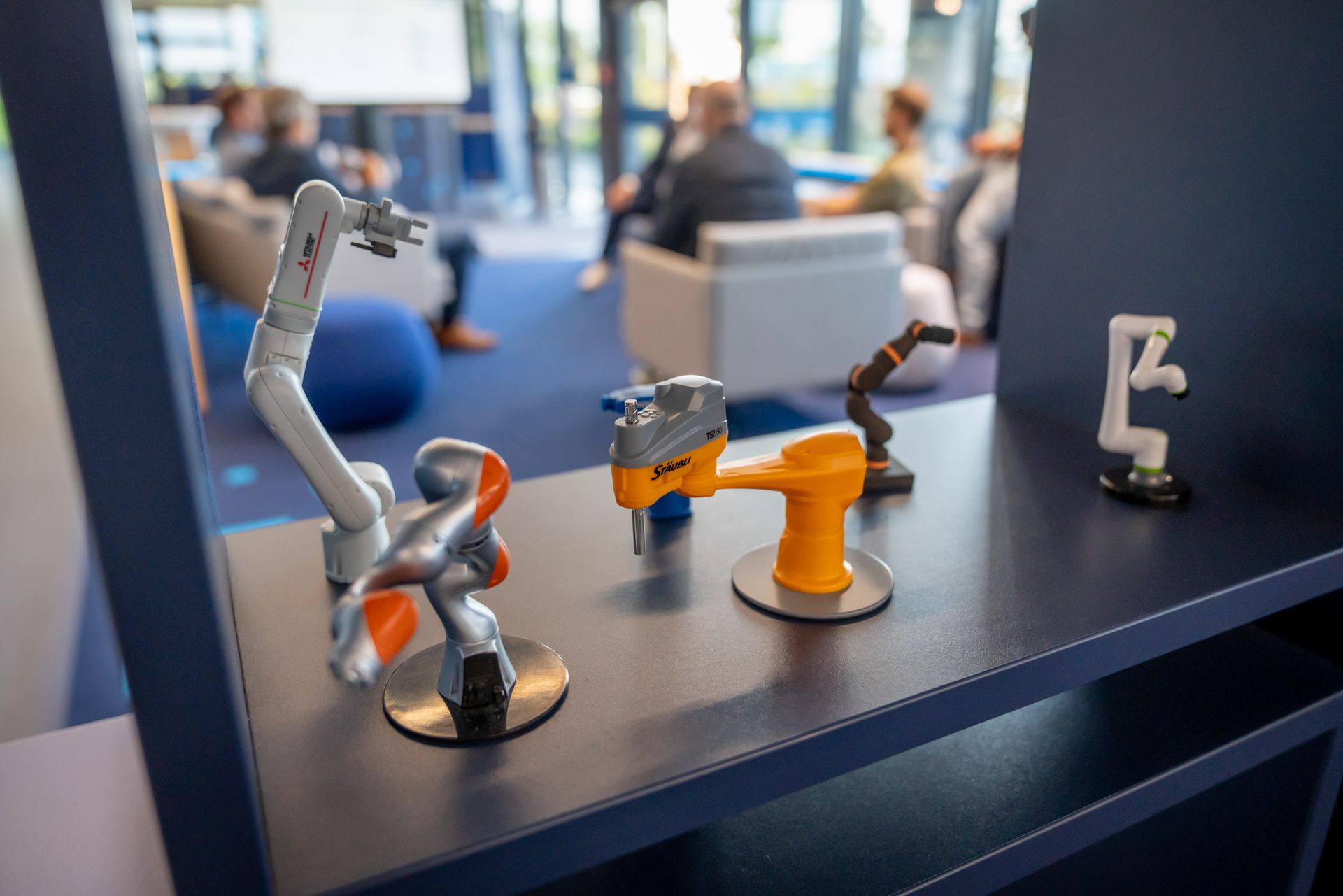
The venue itself embodies this principle. At ARENA2036 on the University of Stuttgart campus, corporations, mid-sized companies, research institutions and start-ups develop and test use cases on shared infrastructure.
INC Innovation Center sent a tangible signal with the announcement of the Future Robotics Exploration Hub. Starting in January 2027, mobile and humanoid robots as well as Physical AI technologies will be tested and compared across manufacturers on real industrial tasks in Stuttgart. Supporters include Liebherr, SICK and NETZSCH, among others.
Companies will be able to bring in tasks from material transport, loading and unloading, or assembly, and examine different platforms, AI models and components under comparable conditions. The privately funded hub is also intended to serve as a learning environment, with training in simulation, data acquisition and AI learning methods.
ASCS: Bridging Expertise
Our main takeaway from the Future Robotics Summit: intelligent robotics faces questions we know from vehicle development. Ralph Lange named software, data and simulation as the key ingredients of modern robotics, with success coming from new partnerships and open source. Rare exceptions and the alignment of simulation with reality are issues the ASCS network works on when testing automated driving functions. There, virtually recreated traffic scenarios help, as do open standards that allow such scenarios to be described in a uniform way.
The cross-industry ASCS network brings together expertise in simulation, AI, high-performance computing and digital product development. It combines experience from vehicle development, virtual validation and autonomous systems. What has proven effective there in building test cases and correlating simulation with real-world measurement data can also help in developing and testing robots. ASCS can act as a bridge here, connecting companies that have concrete robotics challenges with experts in simulation, AI and high-performance computing. Use case before technology, systems thinking instead of isolated solutions, partnership instead of procurement: the summit’s guiding principles fit well with a neutral network in which manufacturers, suppliers, researchers and users work together.
Our conclusion is optimistic: things are moving, in research institutions, companies and the networks that connect expertise. Europe has technological strengths, Germany a broad industrial base. The most important success factor remains people, because the future of robotics is not created by smarter machines alone, but by the people who shape it together.
Which task in your production or logistics operations would you like to solve with robotics? And what would you need to test virtually and on the real system before making an investment? We look forward to hearing from you.
Our thanks go to INC Innovation Center as well as SCHUNK, TRUMPF, OMRON and FANUC for so openly sharing their insights.
Photo Credits: INC Innovation Center | Photo: Manor Lux